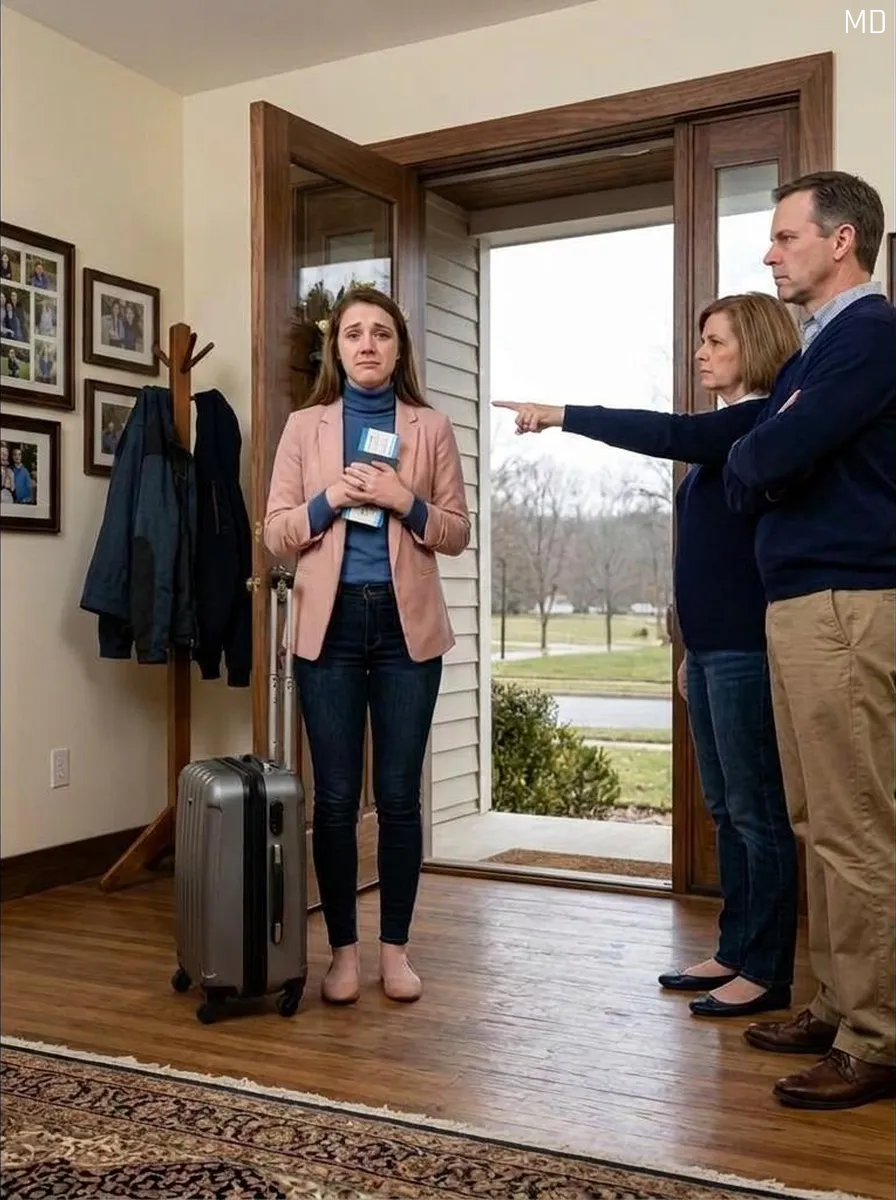
My phone rang the night before the flight I had spent three years saving for. Mom said my sister Brooke suddenly needed me to watch Caleb, eight, and Sophie, five, for four days. Every hotel, tour, and rental car for Iceland was already prepaid, and my closest friend Tessa was packed. When I reminded them that the children’s father lived twenty minutes away, Dad said, “Family comes first.” Brooke had built years of last-minute emergencies around that phrase, and I was always expected to surrender my plans. This time, I said no, silenced my phone, and boarded the plane.
Seven hours later, I landed near Reykjavík and found thirty-eight missed calls. Brooke’s final message read, “They’re at your door.” My security camera showed her SUV arriving less than an hour after I left. She placed the children on my porch with backpacks, a grocery bag, and one thin blanket, then told them I was inside taking a shower. The temperature was 43 degrees, and Sophie’s inhaler was missing. After Brooke drove away, Caleb kept knocking while Sophie began crying, and he wrapped the blanket around her shoulders. A neighbor eventually found them and called local responders. They were safe, but Brooke demanded that I return and describe everything as a harmless misunderstanding.
Instead, Tessa helped me save the footage, messages, and complete timeline. A family-support coordinator soon discovered there had never been a Boston work conference. Brooke had lost her job eleven days earlier and had refused the children’s father’s offer to keep them. She had traveled to a resort with a wealthy club member while using my niece and nephew to force me home. My parents still insisted that I cancel the trip, until investigators found an envelope beneath my doormat containing medical forms naming me as caregiver. The signature at the bottom looked like mine—but I had never signed it, and the documents revealed a far more carefully prepared plan.
Further records showed Brooke knew I was flying, expected Mom to pressure me into returning, and had written that leaving the children at my house would “snap me out” of my independence. Investigators also uncovered redirected fundraiser payments, false explanations, and years of misleading money requests. Caleb and Sophie were placed safely with their father while Brooke entered counseling, parenting education, temporary housing, and a structured repayment plan. I returned home with firm boundaries: no surprise childcare, no direct loans, and no use of my address or signature. Years later, Brooke admitted she had expected me to fix everything. Our relationship remained limited, but the children were secure and she slowly rebuilt her life. Iceland did not destroy our family; it exposed a system that had always depended on my surrender.