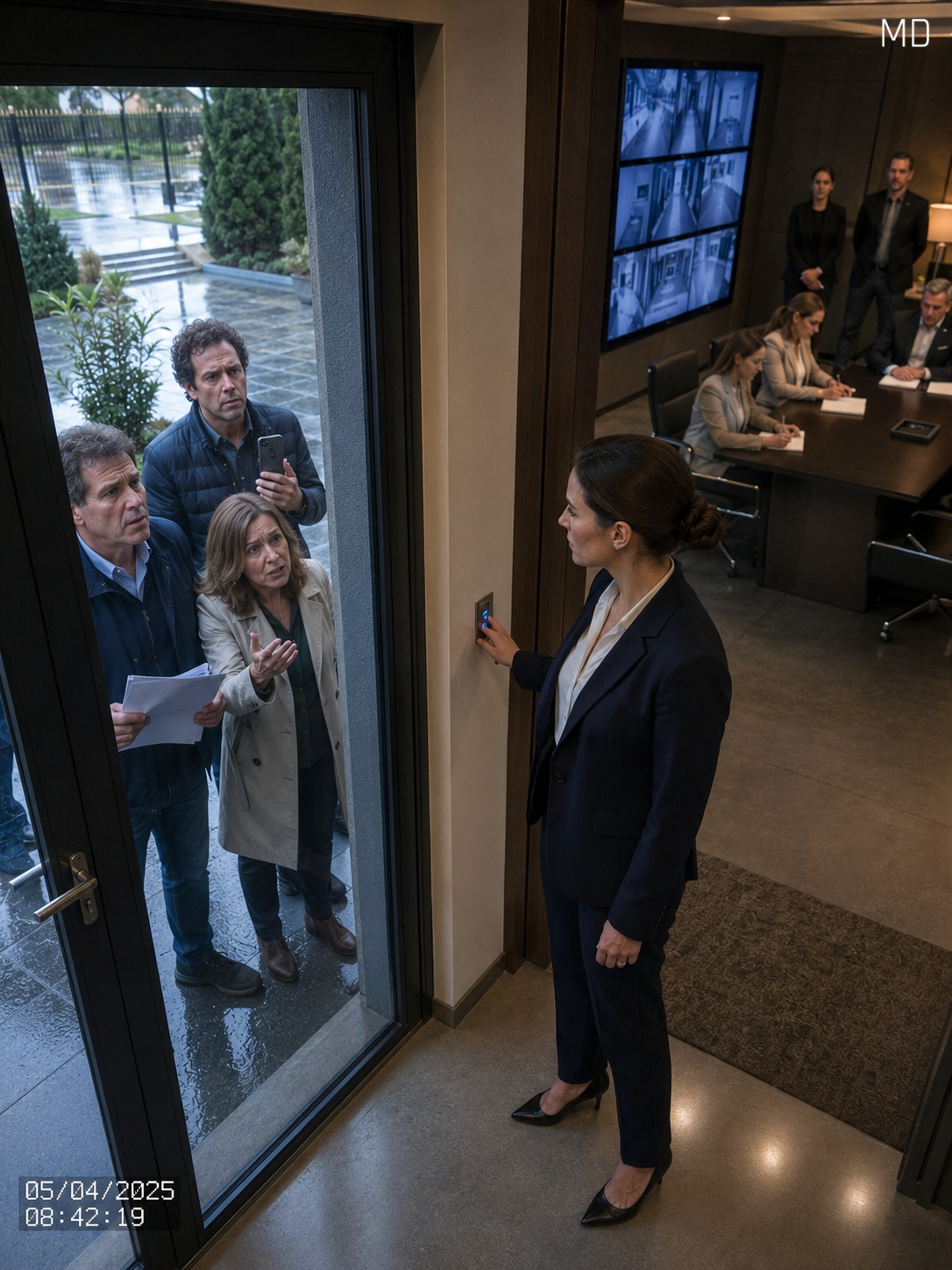
Three days before Christmas, Ellena Voss watched her father arrive at her newly purchased manor with a locksmith, a folder of papers, and her younger brother carrying suitcases. Her mother stood behind them filming as if the move had already been approved. Through the intercom, Ellena calmly told them they had no permission to enter, but her father raised what he claimed was a valid lease and ordered the locksmith to open the antique front door. What he did not know was that Ellena had prepared for this exact moment—and the house was far from empty.
For years, Ellena had been treated as the forgettable child while her brother Nathan received praise, money, and second chances. After building a successful career as an illustrator, she cut financial ties with her family, protected her credit, and quietly bought the neglected manor through her art company. Soon afterward, her attorney, Marcus, discovered that her father’s failing development business had used a forged version of Ellena’s signature to support a $1.88 million loan. Then another false document appeared: a lease claiming her parents already had the right to live in her home. The discovery made every old family warning feel newly calculated. When a suspicious locksmith contacted her, Ellena finally understood their larger plan.
On the morning they arrived, two police officers waited in the library while three investigative reporters sat silently in the dining room. The locksmith, already cooperating with investigators, asked Ellena’s father to confirm on camera that he had the legal right to enter despite the owner’s refusal. He did. Nathan then tried to force the door after the locksmith hesitated, damaging the frame and triggering the alarm. Officers stepped into the entrance hall, followed by Marcus and the reporters. Ellena’s father insisted the lease was real and produced a false medical letter claiming she could not manage her affairs—but investigators had already verified that the doctor never wrote it. The room went completely silent.
Ellena then revealed the evidence connecting the fake lease, the medical letter, and the business loan. Messages showed Nathan knew her credit had been used to keep the company afloat, while her mother admitted they planned to stay at the manor because the bank was taking their home. The family quickly turned on one another, and the investigation eventually uncovered wider financial misconduct. Ellena’s father accepted a plea agreement, Nathan cooperated and received financial penalties, and the forged guarantee was removed from Ellena’s record. Months later, she opened the manor as an artists’ residency for women rebuilding their independence. The damaged doorframe became a sculpture called Entry Denied, displayed beside the entrance. That Christmas, surrounded by invited guests, Ellena finally understood the truth: her family remembered her only when they wanted something, but she had learned to remember herself.